

Our solutions
No search results
Offer for treatment rooms

Nosocomial infections are a major problem in modern medicine, because many times they are mean a failure in the treatment and the emergence of complications. The most common problems associated with infections is the lack of aseptic behaviour in the where a medical procedure is performed, a delay in the diagnosis of infection or improper treatment. For the hospital, it is connected with the fact that all these aspects – prevention, diagnosis and treatment – must be done properly.
More and more hospitals decide to obtain an ISO certificate, which leads to the development of procedures for all phases of patient treatment, the observance of which will reduce the number of infections. Moreover, the awareness of the medical staff of this problem is increasing year by year.
The problem of nosocomial infections is also a challenge for manufacturers of medical devices used in the performance of specific procedures in health care units.
The answer to the security needs of the treatment are Matoset products that combine functionality and economy by intentional combining of dressing material. In other words, the individual Matoset is dedicated to a given medical procedure, and particular elements are arranged in a way forcing to perform activities in a particular sequence in accordance with asepsis principles. The structured arrangement and thoughtful composition translates to security, convenience and time saving.
Interview:
Monika Cerkaska – TZMO Product Manager
Katarzyna Moś – Master in Nursing with a specialisation in epidemiological nursing
M.C. In which situations the use of sterile Matoset sets worked best?
K. M. In our daily practice we use Matoset products mainly in treatment rooms, when we have to perform minor medical procedures, such as suture removal or dressing change. Using the sterile sets I am sure that I have all the necessary materials prepared and within a few moments I am able to perform a minor procedure. The ready-for-use sets are indispensable at the patient’s bedside when transporting the patient and performing a procedure in the treatment room is not possible.
M.C. And what about situations when you need to change the dressing at patient’s home?
K. M. Exactly. The health visitor will surely appreciate the comfort of using the sets. It is always certain that all necessary materials are prepared, and each patient has a sense of individual treatment and safety guarantee since the set is designed specifically for him.
M.C. So it much easier to work with the set?
K. M. Yes, it’s easier because they improve the course of a medical procedures, but also thanks to them the work is a lot safer. The arrangement of particular elements determines the actions to be performed. We cannot omit any items e.g. gloves, which are usually placed at the top, and only after their application it is possible to use other sterile components. This minimises the risk of infection, and this is important both for us and for the patient. The documentation process is facilitated by adhesive labels with information about the product, which can be placed in the patient’s records.
M.C. So can we conclude that the sets guarantee the asepsis regardless of the place of performing the procedure?
K. M. Yes, we can. The patient is not always in a place where it is possible to e.g. securely change a dressing. Matoset enables us to do so, and also reduce the time to prepare for the procedure and facilitate the organisation of the work.
M.C. At the end I have to ask – what about the costs?
K. M. The application of complete sets dedicated for a given procedure eliminates the need to open multiple unit packaging, which directly translates into the cost of the procedure. When you open a few packs it increases the possibility of infection of the sterile material. Besides, using the sets – all the content is deliberately used. The rational use of dressing material certainly reduces the cost of its purchase. In addition, medical staff does not have to devote time to complete the dressings for the procedure. In conclusion, I would like to add a few words about the catheter sets and sets for the disinfection of the surgical field, which will surely work well in emergency rooms, although, of course, not only. In situations where time counts, we are not always able to fully observe aseptic rules, the lack of which – as you know – can lead to complications and the cause of prolonged hospitalisation. A patient who is in a life-threatening situation requires undertaking multiple procedures at the same time. The risk of infection while saving lives is greater than during the planned procedures. Therefore, the use of Matoset in the form of ready-for-use sets, such as the catheter set helps to observe the asepsis. A set that contains all the necessary components including an adequate size catheter, allows for the reduction of unnecessary actions to a minimum. The same is true also in the case of the set for disinfecting surgical field, which is justified and fully used up when performing medical procedures in life-threatening conditions. During a resuscitation it is often necessary to apply an endovascular electrode or perform a subclavian vein puncture. Having the complete disinfection set we can take care of the proper preparation of the patient for such procedures in a short time. It is important to save a patient without putting him at any additional risk that after a successful resuscitation may lead to an unwanted contamination. We save the patient and instead “give” him an infection and extended hospital stay. The state of emergency passes, and the patient will require treatment for complications resulting from non-compliance with the basic aseptic principles, the observance of which is certainly facilitated by the Matoset.
M.C. Thank you very much for your time.
Bożena Krymska
Specialist for epidemiological and cardiac nursing – Silesian Centre for Heart Diseases in Zabrze
The quality of medical services means meeting or surpassing the expectations of the patient, the compliance with standards and the degree of realising the benchmarks. According to H. Lenartowicz high-quality health care is one that corresponds to certain criteria, indicating compliance with current professional knowledge and that which, under given circumstances, enables the patients to achieve desired health results. The quality of offered medical services is very important because it concerns the priceless value of life and health of the people making use it.
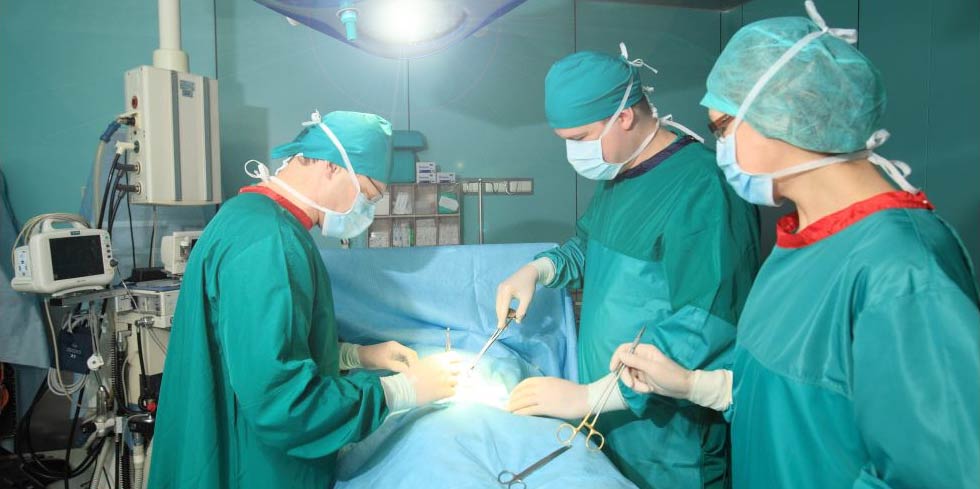
Although the quality is in fact the satisfaction with well performed medical services, for each party – the performer and the recipient of the service – it means something else.
- For the patient, the quality of medical services depends on the efficient recovery or health improvement after leaving the hospital.
- For employee of the health care facility, the quality is understood as the compatibility of this service with current professional knowledge and achieving health improvement without adverse events.
- For the management of the facility, the quality is to provide services at a sufficiently high level with a correspondingly lower cost.
Any medical procedure performed in a patient comprises several steps:
- preparation of a set,
- performing medical actions,
- disposal of the set, waste management,
- documenting the procedure,
- preparing equipment and reusable instruments for reuse.
Each of these steps requires effort, resources and time. Performing the procedure under various conditions, especially in rapid situations and in emergency rooms, is at high risk of error, which can undoubtedly affect the quality of the procedure, and therefore the quality of the overall medical service.
All of the above steps can be improved by ready-for-use sets adjusted for different procedures and medical treatments. The preparation of a “traditional” set includes the completion of an appropriate amount of equipment, instruments, medicines, and dressing material needed to perform the procedure. However, a ready-for-use set saves the preparation time, especially if the particular procedure is performed urgently. The nurse does not have to wonder how many items to prepare and what exactly is needed. The set provides materials needed to carry out the procedure in terms of their quality and quantity.
The content of the final set forces to perform the procedure in one correct way without omitting certain activities. An example would be the optimum number of six gauze tampons included in the set for bladder catheterisation, which demands to devote enough time to disinfect the area surrounding the urethral meatus, if all the tampons are used. The outer package in form of a rigid blister, often with a few chambers, may serve as a container for liquids or waste material, eliminating the need for additional vessels.
The ready-for-use allow to perform a procedure, opening only one sterile package, which greatly reduces the amount of waste, e.g. many external packaging of: sterile swabs, instruments, gloves, syringes, etc. The sets are completed optimally for a given procedure, which means that any such intervention is carried out using the same amount of equipment and dressing material. In practice, when we complete a set ourselves, there is often a tendency to open more packaging of e.g. dressing material than needed (swabs, cotton balls), just in case, in order not to run out.
The procedure performed using a ready-for-use set quickly becomes standardised, enables to easily monitor the consumption of materials, and thus counting the cost.
It is very easy to clean after the procedure. Everything that has been used is one medical waste. In view of the fact that everything in the set is disposable, the entire material is directed to the waste, without the need to segregate.
It is very simple and accurate to document the performed procedure due to the included self-adhesive labels.
The use of disposable instruments included in the set brings savings, resulting from the elimination of further re-sterilisation. The sterilisation process means additional costs: water, electricity, disinfecting agents, sterilisation packaging, , sterilisation tests, and human effort.
One of the major advantages of the sets is the elimination of adverse events, such as the prevention of infections. Returning to the quality of medical services, the implementation of a program to prevent hospital infections, and systemic efforts to prevent errors in medical procedures is very important to ensure high quality. Reducing the number of infections is an objective indicator of the quality of medical services, and any infection that occurred, and which could have been avoided, is a failure of the institution providing health services. The ready-for-use sets “tailored” to a specific procedure are a perfect tool to prevent such failures. The sets guarantee the sterility of equipment and materials used to perform the procedure. Therefore, the manufacturer takes the responsibility for their sterility, and thus for the quality of the medical device.
Undoubtedly, the application of the sets in practice improves work, gives satisfaction to medical staff, reduces costs, and leads to patient satisfaction. Moreover, better quality of medical care leads to the increased competitiveness of the medical facility in the market.
Literature
- Ciuruś M., Hygiene procedures in health care facilities, Institute for Health Protection, Warsaw 2009.
- Dykowska G., Opolski J., The quality of health care services, self-education package, Warsaw 2001.
- Heczko PB Wójkowska-Mach J. (red.), Hospital infections. Handbook for infection control teams, PZWL, Warsaw 2009.
- Holub, J., Competitive quality strategy on the medical service market, [in:] Nogalski B., Rybicki J. (red.), Modern management of a health care facility, Dom Organizatora, Toruń 2002.
- Lenartowicz H., Quality management in nursing, CEM, Warsaw 1998.
- Maciag A. Kruszewski, K., Topczewska-Tylińska K., Michalak J., The Role of processes, standards and procedures in shaping the quality of health services, Alfa-medica Press, Bielsko-Biala, 2007.
- Piątek, A. Improving the quality of nursing care [in] Ksykiewicz-Dorota A. (red.), Fundamentals of organising nursing care, published by Czelej, Lublin 2004.